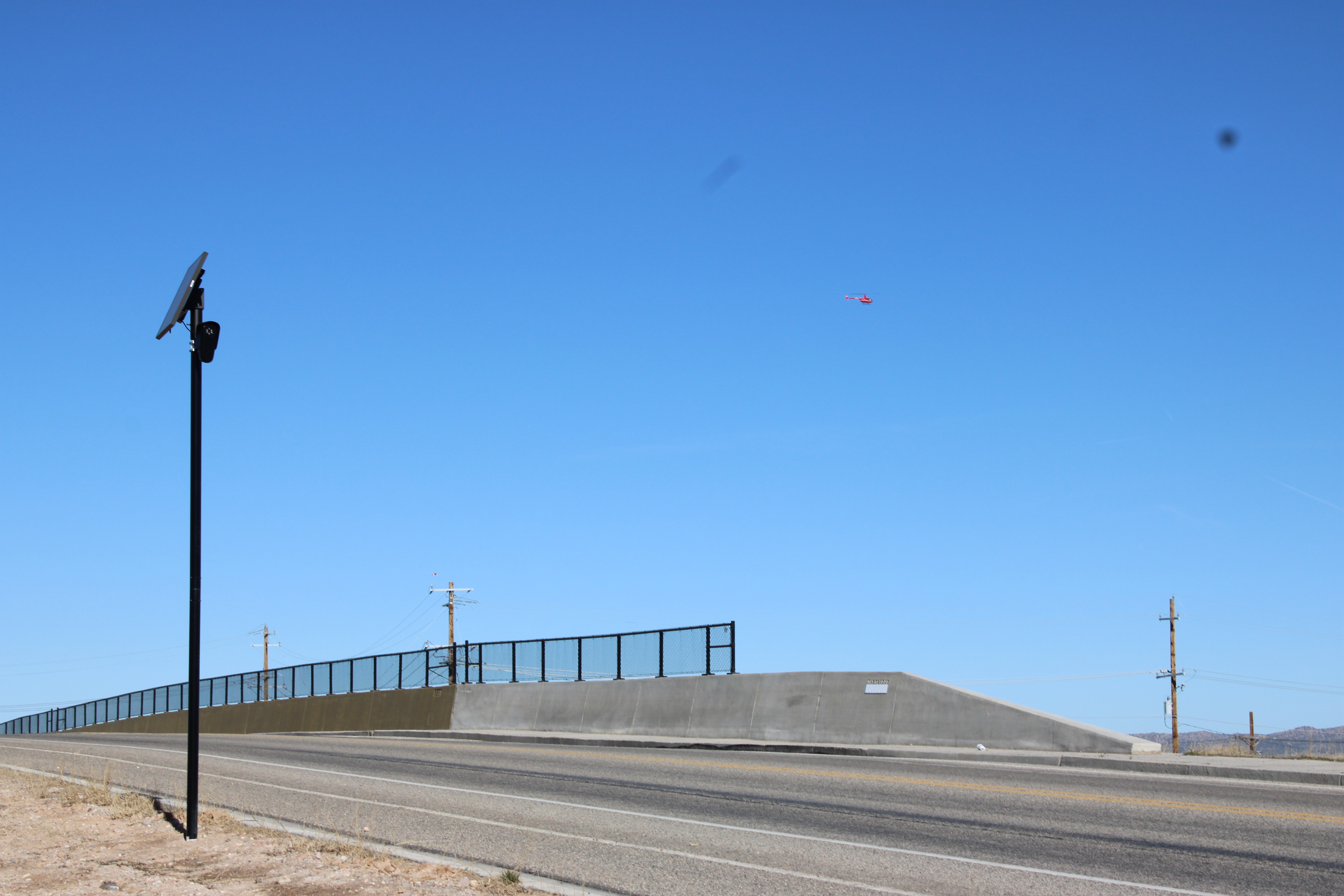

By: Sachet A. Carter | The Zion Times
As Cedar City Council prepares to vote tonight on whether to renew the city’s contract with Flock Safety—a decision that would cost taxpayers approximately $157,000—a recent criminal case in Cedar City involving the technology is raising broader questions about its role in criminal investigations and the consequences of relying on it improperly.
The vote comes more than a year after The Zion Times (TZT) first examined Cedar City’s implementation of Automated License Plate Reader (ALPR) technology through a three-part investigative series exploring community concerns over privacy, constitutional questions, the department’s first successful use of the system and the promises made when the cameras were approved.
Now, as council members prepare to determine whether the program should continue, one local case is prompting renewed scrutiny of how those investigative tools are used—and whether the safeguards surrounding them are sufficient.
A CASE THAT TOOK A DIFFERENT TURN
In May 2025, the Cedar City Police Department arrested Kelton Prisbrey in connection with an alleged assault and attempted robbery involving two men at a campsite near Center Street.
According to court records filed in 5th District Court and police reports obtained through Utah’s Government Records Access and Management Act (GRAMA), officers responded to an assault near 20 S. 580 East after one of the alleged victims walked to a nearby home seeking help. While en route, dispatch advised officers there were two suspects and that one had allegedly threatened to kill the victim with a 9-inch blade. Dispatch also reported the suspects had “fled the scene in an early-2000s red chevy pickup truck and headed back into town”.
When officers arrived they reportedly found the victim suffering from a deep laceration beneath his eye, extensive facial swelling and minor injuries to his back and legs. The victim told investigators he had been attacked inside his tent by a large man driving a red pickup truck with equipment in the bed and described the alleged assailants as two white men, each about 6-foot-1, with one weighing approximately 180 pounds and the other about 245 pounds.
Officers went with the victim to his campsite where they were met by another victim who also reported being repeatedly kicked and stomped on by a suspect matching the same description. The second victim told officers he was asleep in his tent when a large male woke him up and and demanded he give him all his money. After the victim reportedly told the suspect he didn’t have any money, the suspect then began “kicking his legs repeatedly and stomped on his chest”. He also told officers that while he was being beaten, he saw a smaller man run by and then witnessed both individuals enter a pickup truck parked at the bottom of the hill.
Officers then transported one of the victims to the Cedar City Hospital where he stated the chevy truck “appeared to have some bars connecting the bed to the cab of the truck”.
After interviewing the victims and ensuring they received medical treatment, officers drove around the city searching for the suspects vehicle but were unable to locate it. An officer then used Cedar City’s new Flock Safety ALPR system in an attempt to identify the truck. According to the police report, the system located a red pickup in the area around the time of the incident that appeared to have visible straps in the bed but officers were ultimately unable to locate the vehicle.
In a supplement added to the police report a few days later, officers documented additional information about the campsite attack, including more Flock Safety footage and further information from one of the victims.
According to the report, one of the victims went to the Care and Share, a local homeless shelter, and reviewed records of individuals who had been staying there during the timeframe of the alleged attack. He then met with officers at the police department where he handed them a piece of paper with Kelton Prisbrey written on it.
The report never explains why the victim believed one of the suspects would be staying at the shelter or what led the victim there in the first place.

Make a one-time donation
Make a monthly donation
Make a yearly donation
Choose an amount
Or enter a custom amount
Your contribution is appreciated.
Your contribution is appreciated.
Your contribution is appreciated.
After Prisbrey’s name was handed to officers, they were able to find a red truck registered to him but stated in the report that “it was a Ford, not a Chevy”, also adding the truck was “captured on Flock that day with a white canopy, which also doesn’t match the description the victims gave officers” but doesn’t say where the Flock cameras captured the truck or if it was in the area of the attack.
On April 30, six days after the alleged assault, officers responded to a disorderly conduct call where Prisbrey was reportedly present. After identifying him, officers told Prisbrey they wanted to ask him questions about the investigation. According to the report, Prisbrey responded that “he pleads the 5th” and declined to answer their questions. His red Ford pickup was also at the scene, and he confirmed it belonged to him.
Despite the discrepancies in the victims statements and the Flock images involving the red truck, Kelton was transported to the Iron County Jail and charged with one third degree felony for attempted robbery, one class A misdemeanor for assault with substantial bodily injury and and one class B misdemeanor assault.
The report further states that another individual present during the April 30 contact had also been identified by officers as being present during the alleged assault. Unlike Prisbrey, however, that individual was not arrested or charged. Instead, officers wrote that charges could be filed later or submitted to attorneys for review.
Despite the arrest and the charges filed against Prisbrey, the prosecution ultimately did not survive the preliminary hearing.
THE COURT’S RULING
At the preliminary hearing, prosecutors withdrew the attempted robbery charge after concluding there was insufficient evidence to proceed. Judge Meb Anderson also declined to bind Prisbrey over on the class A misdemeanor charge of assault resulting in substantial bodily injury after finding the State failed to present evidence of “substantial bodily injury.” He later dismissed the remaining class B misdemeanor assault charge with prejudice, bringing the prosecution to an end.
In his written ruling, Anderson methodically explained why he believed the evidence fell short of establishing probable cause.
He noted the testimony presented during the preliminary hearing established only that a victim suffered a cut to his face while camping in the canyon and reported being assaulted by a white male, approximately 6-foot-2 and 180 pounds, driving a red pickup truck with equipment in the bed.
According to Anderson, law enforcement ultimately identified Prisbrey as a suspect because he drove a red pickup truck and his vehicle had been in the general area of the canyon. However, Anderson pointed out that Prisbrey’s truck had a white shell and no equipment in the bed—details that did not match the description provided by the victims.
The judge further noted that although the testifying officer identified Prisbrey in court, he identified him only as the suspect in the investigation. No testimony was presented regarding Prisbrey’s height or weight, despite those characteristics being included in the original suspect description. Anderson also noted there was no testimony identifying Prisbrey as the individual who committed the assault.
In addition, Anderson wrote that the State presented no testimony describing the assault itself beyond the contents of the 911 call and a photograph of the victim’s injuries.
“The State asks this Court to speculate or theorize that Mr. Prisbrey might be the assaulter based on his vehicle generally being in the canyon on the night of the alleged assault,” Anderson wrote. “Without more, even in the relaxed arena of a preliminary hearing, this evidence is not sufficient for a bind over on an assault charge.” He concluded that binding Prisbrey over for trial would require the court to engage in “theorizing about matters over which there is no certain knowledge at hand.”

THE PROMISES MADE WHEN FLOCK WAS APPROVED
When Cedar City Council considers whether to renew its contract with Flock Safety on Wednesday, members will be voting on the same technology city officials introduced more than a year ago as an investigative tool intended to assist law enforcement.
At the time, Cedar City Police Chief Darin Adams told TZT “Officers still have to use other means to obtain information during a criminal investigation. LPRs are not always stand-alone tools.”
CEDAR CITY POLICE CHIEF DEFENDS FLOCK SAFETY IN RECENT FACEBOOK VIDEO
With the City Council vote approaching, Cedar City Police Chief Darin Adams recently released a video on the department’s Facebook page after saying he had received numerous questions and concerns from the public about the Flock Safety program.
According to Adams, the purpose of the video was to explain how the system works and “hopefully alleviate any concerns” residents may have about the technology.
Adams said the department implemented Flock Safety “with a focus to leverage technology and enhance our public safety efforts.”
He explained that the cameras capture only still images of the rear of vehicles and are designed to identify license plates and vehicle descriptions—not drivers.
“The cameras take a picture of the rear of the vehicle only,” Adams said. “It doesn’t take a picture of the front of the vehicle. It looks for the plate or the vehicle’s description.”
“The pictures are still pictures that we receive and not video.”
Adams also emphasized what the technology is not capable of doing.
“What they can’t do is view the driver. There is no facial recognition capability that we utilize. There’s no capture of traffic violations. And there’s no real-time tracking of vehicles.”
He also reiterated that officers must conduct additional investigative work after a vehicle is identified through the system.
“Additionally, when an officer has a suspect in a case and puts a vehicle description or a plate into the system, the officer has to do further follow up to determine who the owner of that vehicle is before follow up can take place.”
Adams added that the department retains Flock data for only 30 days before it is overwritten, said the system is regularly audited, and encouraged residents to review the department’s Automated License Plate Reader Transparency Portal available on the city’s website.
He concluded by pointing to several investigations in which the technology had assisted officers, including a retail burglary that led to two additional burglary cases, an arson investigation, multiple hit-and-run cases, road rage investigations and other theft and drug cases.
“I just want to come to you today to hopefully alleviate any concerns you have,” Adams said. “I make a commitment to you that I am ensuring that our officers and staff use this technology responsibly and appropriately. This is really something that we’ve wanted to implement for some time to help us in our public safety efforts and to be a force multiplier in our efforts to keep you all safe.”
THE BROADER LEGAL QUESTIONS
When Cedar City first announced plans to implement Flock Safety in 2025, TZT published a three-part series examining not only the technology’s potential benefits, but also the constitutional, legal and privacy questions surrounding its use.
The reporting explored concerns raised by residents over government surveillance, predictive policing, data retention and the expanding role of Automated License Plate Readers (ALPRs) in criminal investigations. At the same time, it acknowledged the technology’s potential benefits, documenting cases in which license plate readers had helped law enforcement identify suspects, recover stolen vehicles and solve serious crimes.
The series also examined the broader legal landscape surrounding ALPR technology, including the U.S. Supreme Court’s 2018 decision in Carpenter v. United States.
Although Carpenter involved historical cell-site location information rather than license plate readers, the Court recognized that prolonged digital tracking can reveal an intimate picture of a person’s movements, associations and private life. The Court ultimately held that law enforcement generally must obtain a warrant before accessing historical cell phone location data, concluding that such long-term surveillance implicates Fourth Amendment protections.
Since that decision, courts, legal scholars and civil liberties organizations have increasingly questioned whether similar constitutional principles could apply to Automated License Plate Readers, which also collect location data over time. Some have argued that repeated ALPR scans can create what courts have described as a “mosaic” of a person’s movements, raising many of the same privacy concerns discussed in Carpenter.
The reporting also examined concerns raised by civil liberties organizations, including the American Civil Liberties Union, which has argued that widespread deployment of ALPR technology has the potential to create detailed records of where people travel, who they associate with, how long those records are retained and how that information may be shared between law enforcement agencies and private vendors. Other privacy advocates have similarly questioned whether the rapid expansion of the technology has outpaced existing legal protections.
Supporters of the technology, however, argue Automated License Plate Readers have become an increasingly valuable investigative tool, helping solve violent crimes, recover stolen vehicles, locate missing persons and identify suspects who might otherwise never be found.
More than a year later, as Cedar City Council prepares to decide whether to renew its contract with Flock Safety, many of the same constitutional, legal and privacy questions raised when the cameras were first introduced remain part of a broader national conversation that continues to evolve.
THE LARGER NATIONAL DEBATE
Cedar City’s discussion over Flock Safety is part of a much larger national debate unfolding in communities across the country.
While thousands of law enforcement agencies have adopted Automated License Plate Reader technology to help investigate crimes, the systems have also become the subject of lawsuits, legislative proposals and growing scrutiny from courts, privacy advocates and civil liberties organizations.
Although agencies frequently cite successful investigations involving ALPR technology, documented cases have also emerged in which people were wrongly stopped, arrested or accused after license plate reader alerts proved inaccurate or were not independently verified. In several instances, courts and internal investigations have concluded that officers failed to corroborate automated alerts before taking enforcement action.
Those cases have reinforced a point Flock Safety itself makes to law enforcement agencies: automated license plate reader alerts are intended to generate investigative leads, not serve as conclusive evidence. Independent verification by officers remains an essential part of the investigative process.
The public debate has continued well beyond courtrooms and city council chambers.
One of the most widely publicized cases was investigated by FOX31 Denver, which reported on a Colorado woman who was wrongly accused of package theft after investigators relied on Flock camera data. During the encounter, body camera footage captured an officer telling the woman, “You can’t get a breath of fresh air in or out of that place without us knowing,” referring to the department’s camera network. The allegations against the woman were ultimately dropped, but the case sparked renewed debate over the scope of automated surveillance, investigative reliance on ALPR technology and the importance of independently corroborating information generated by license plate reader systems.
As communities across the country continue weighing the public safety benefits of Automated License Plate Readers against concerns over privacy, accuracy and oversight, Cedar City’s upcoming vote reflects many of the same questions being debated nationwide.
THE DECISION BEFORE CITY COUNCIL
On Wednesday, Cedar City Council won’t be deciding whether Flock Safety has helped solve crimes. By nearly every account, it has.
Instead, council members will decide whether the system should continue operating in Cedar City for another year—and whether the safeguards, oversight and investigative practices surrounding the technology remain sufficient to justify another $157,000 investment of taxpayer dollars.
The outcome of that vote will determine whether Flock Safety remains part of Cedar City’s policing strategy, even as communities across the country continue wrestling with many of the same constitutional, privacy and evidentiary questions.
IF YOU’D LIKE TO READ OUR PAST REPORTING ON THE NEW FLOCK SAFETY TECHNOLOGY YOU CAN FIND THEM IN THE LINKS BELOW:
CEDAR CITY’S NEW ALPR SYSTEM SPARKS PRIVACY CONCERNS AND PUBLIC DEBATE – The Zion Times
ALPR TECHNOLOGY, PRIVACY CONCERNS, AND THE LEGAL LANDSCAPE: A COMMUNITIES DILEMMA – The Zion Times
CEDAR CITY POLICE MAKE FIRST ARREST USING NEW ALPR SYSTEM IN BURGLARY INVESTIGATION – The Zion Times
MAN ARRESTED IN CONNECTION WITH VIOLENT ASSAULTS AT CEDAR CITY CAMPSITE – The Zion Times
SOURCES:
Woman says police used Flock cameras to wrongfully accuse her of theft


Leave a Reply