
By: Sachet A. Sullivan
A recent press release from the Cedar City Police Department (CCPD) announcing the launch of a new Automatic License Plate Reader (ALPR) system has sparked public controversy.

The new technology, called “Flock Safety,” is described as a “cutting-edge crime-solving tool” aimed at enhancing public safety.
According to the press release, the department stated, “This technology solution will be rolling out over the next few weeks and aims to deter and help solve crime to continue ensuring the safety of our community.”
The system, as described in the press release, includes “automated license plate readers (ALPR) and live, recorded video cameras, that work 24/7 to provide our officers with objective evidence to help solve crimes faster and more efficiently.”
“These tools are specifically used to capture license plates only on the rear of vehicles. The cameras do not capture pictures of the vehicle driver” the press release states.


Following the department’s online press release, more than 400 comments were posted, with many citizens expressing concerns about the future use of the new ALPR system.

In a climate where precrime and predictive policing are hotly debated topics, many citizens were left questioning if the new ALPR cameras will be used to support a future surveillance state?
Many citizens described the cameras as dystopian, drawing comparisons to George Orwell’s, 1984.

Other community members echoed the words of Benajmin Franklin’s once famous quote “Those who sacrifice liberty for safety deserve neither and will lose both.”
While some citizens expressed concerns, others voiced support, with one woman noting that ALPRs were used to capture her sister’s killer in another area.
The ALPR system cross-references captured license plates with a law enforcement database, alerting officers if a vehicle is connected to a criminal event or flagged for other reasons.
In an environment shaped by lingering trauma from past health mandates during the recent pandemic, many citizens expressed concerns that the new ALPRs could be used to target those who resist unconstitutional mandates, protestors or political dissidents.
Amid today’s legal climate, questions also arose about whether the new ALPRs could be used in lawfare. With criminal warrants now being issued in civil court cases, some were asking where law enforcement should draw the line?
Others in the community highlighted privacy precedents set by previous Supreme Court rulings, particularly the 1979 decision in Smith v. Maryland, which held that individuals have no legitimate expectation of privacy in certain situations.
In an exclusive interview with TZT, Public Information Officer, Sgt. Kirk Lovell addressed several community concerns and provided details about the new system.
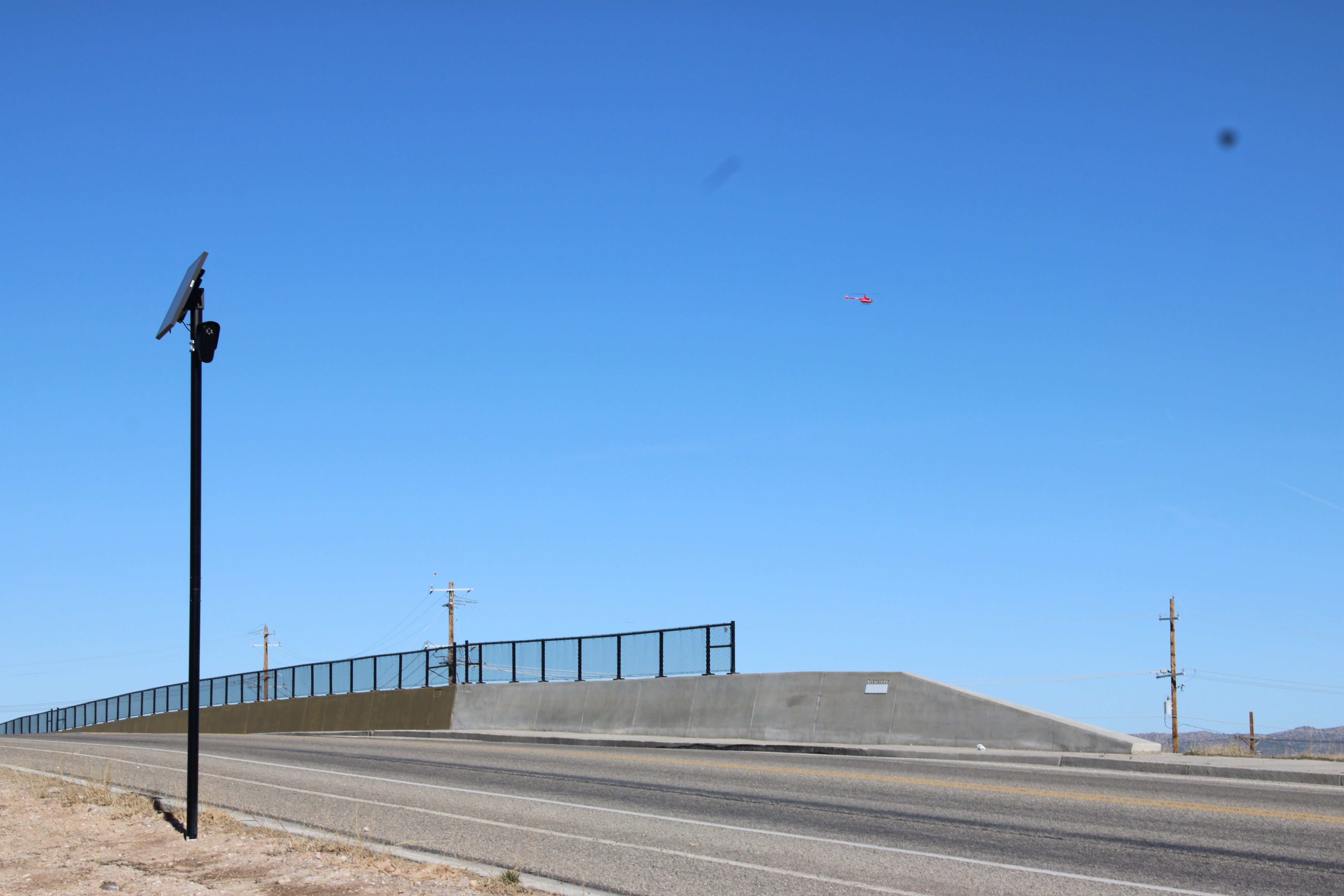
“The 16 readers will be installed along the main thoroughfares in town, including both ends of I-15 and SR-14,” said Sgt. Lovell. “These cameras do not capture images of your vehicle, and they cannot access criminal information.”
When asked about the cost of the new system to taxpayers, Sgt. Lovell explained that under the agreement with Flock Safety, the system would cost approximately “$180,000 for the first year and around $150,000 for each subsequent year.”
When questioned about the cameras, Sgt. Lovell explained, “The cameras capture an image of the vehicle and compare it to national databases, such as the NCIC. Within 20 seconds, law enforcement is notified if the vehicle is linked to a crime, stolen, under investigation, connected to an Amber Alert, or has an active warrant attached.”
Sgt. Lovell likened the readers to having additional officers on duty, noting that police officers perform similar tasks every day. “It’s a passive force multiplier,” he said.
IS THE SYSTEM FINAL?
Records from Cedar City Council meetings on Sept. 11, Nov. 6, and Nov. 13 of last year show Flock Safety presentations were given at each meeting.
During the Nov. 6 meeting, Chief Adams of the Cedar City Police Department delivered a 20-minute presentation on the proposed Flock Safety system. The presentation also covered its associated agreement, which council members were set to vote on the following week.
At one point during the presentation, council members discussed a 90-day opt-out period, emphasizing the program’s deployment of Project Prove It, a 90-day free trial initiative.
The order form in the Master Service Agreement outlines the initiative, stating, “Customer will have a 90-day opt-out period (‘Opt-Out Period’) after implementation of the first Flock Hardware to terminate this Agreement without penalty or fees.” It goes on to state that “after the Opt-Out Period, Customer may not terminate this Agreement, and Customer will pay any invoice(s) for the remainder of the Term, Net 45.”
This indicates that the trial period begins after the installation and activation of the first Flock Hardware which was expected to begin on March 1st and run until June.


A separate sheet included in the agreement contains additional details, stating, “This agreement will automatically renew for successive renewal terms of the greater of one year or the length set forth on the Order Form (each, a ‘Renewal Term’), unless either Party gives the other Party notice of non-renewal at least thirty (30) days prior to the end of the then-current term.”
This indicates that the city has 60 days to inform Flock Safety if they wish to opt out.
In a short interview with TZT, Austin Harris, the Flock Safety representative assisting the Cedar City Police Department with the transaction, was asked if the agreement would be considered final if no one contacted Flock Safety?
“They need to tell us if they want to opt out.” said Harris.
Discussions about public relations and how to pitch the LPRs to the community were also held during the Nov. 6 meeting.
“We don’t want to hide it” said Chief Adams, suggesting they put signs on both sides of town notifying the public of the system.
Public comment was encouraged during the meeting, with council members expressing concerns that the community might feel like “Big Brother” is watching them.
In a brief interview with TZT about the new system, Chief Adams said, “Officers still have to use other means to obtain information during a criminal investigation. LPRs are not always stand-alone tools.”
HOW DO ALPR’S WORK
Despite the department’s press release stating that the new system doesn’t capture pictures of the vehicle, many ALPRs are designed to do so.
An article titled “Automatic License Plate Readers: Legal Status and Policy Recommendations for Law Enforcement Use,” published by the Brennan Center, outlines how ALPRs work.
“Automatic license plate readers use a combination of cameras and computer software to indiscriminately scan the license plates of every car passing by. The readers, which can be mounted on stationary poles, moving police cruisers, and even handheld devices, log the time and date of each scan, the vehicle’s GPS coordinates, and pictures of the car. Some versions can also snap pictures of a vehicle’s occupants and create unique vehicle IDs,” the article states.
The article further explains that “the devices send the data to ALPR software, which can compare each plate against a designated ‘hot list.’ Such lists can include stolen cars and cars associated with AMBER Alerts for abducted children. They can also reference vehicles listed in local and federal databases for reasons such as unpaid parking tickets or inclusion in a gang database. These queries happen automatically, though officers can also query plates manually.”
In addition, the article notes that “many cities and agencies retain plate information for future use, sometimes indefinitely,” which can be used to track vehicle locations, identify all cars at a specific site, or predict future routes. While these tools are often low-cost or free for law enforcement, “drivers themselves shoulder the cost of the technology through a fee charged on top of traffic ticket costs,” and “drivers in some jurisdictions can be jailed for failure to pay the private company’s fee.”
The article also emphasizes that “law enforcement use of ALPR data is not limited to reads captured by departments’ own devices.” Many agencies have contracts with vendors like Vigilant Solutions, which provides access to a database of over 5 billion license plate scans, including 1.5 billion from law enforcement. This creates a continuous exchange of data between law enforcement and private companies.
A NATIONAL DEBATE – SCOTUS
While the Supreme Court has limited rulings on this issue, the use of Automatic License Plate Readers (ALPRs) and other surveillance technologies has sparked concerns over excessive police monitoring, especially as these tools become more widespread across the nation. The Court’s Carpenter v. United States decision has raised important questions about privacy, particularly in relation to digital technologies. The ruling established that warrant requirements should be based on factors like comprehensiveness, intimacy, cost, retrospectivity, and voluntariness, providing a framework to evaluate whether these technologies violate individuals’ privacy.
As law enforcement increasingly relies on tools like ALPRs, concerns grow that such surveillance could expand the government’s reach, allowing it to monitor citizens in ways that infringe on their reasonable expectations of privacy.
WHO IS FLOCK SAFETY?
While the company’s website provides limited information on the exact operation of their cameras, it offers some insight into their functionality. The cameras are designed to enhance public safety by capturing objective vehicle data to help solve and prevent crime. Using Vehicle Fingerprint Technology, the cameras can identify vehicles by make, color, and decals, transforming footage into actionable evidence without relying solely on license plates. Operating 24/7, the system sends real-time alerts for vehicles listed on NCIC, NCMEC, or custom Hot Lists through SMS, email, and app notifications, enabling swift law enforcement responses.
https://www.cedarcityut.gov/AgendaCenter/ViewFile/Minutes/_11062024-2801
https://www.cedarcityut.gov/AgendaCenter/ViewFile/Minutes/_11132024-2804
https://www.cedarcityut.gov/AgendaCenter/ViewFile/Agenda/_09112024-2779
https://www.cedarcityut.gov/AgendaCenter/ViewFile/Agenda/_11132024-2804
https://www.brennancenter.org/our-work/policy-solutions/fourth-amendment-digital-age

Leave a Reply