
By: Sachet A. Carter | The Zion Times
A recent criminal case circulating in Iron County raises questions about potential improprieties in the early stages of the investigation that could negatively impact the outcome of the case.
While criminal cases are often discussed publicly before they reach the courtroom, the release of images and details tied to an active investigation can violate legal standards governing pretrial publicity, especially when those materials are shared before charges are filed or while a case is ongoing.
Information, photos, or statements about an investigation shared outside of court proceedings are often considered extrajudicial under court rules. Those rules caution against public communication that could shape how potential jurors view a case before it reaches the courtroom.
Law enforcement and prosecutors are expected to use discretion when releasing information during an active investigation to avoid influencing a potential jury pool.
PHOTOS AND PUBLIC APPEAL:
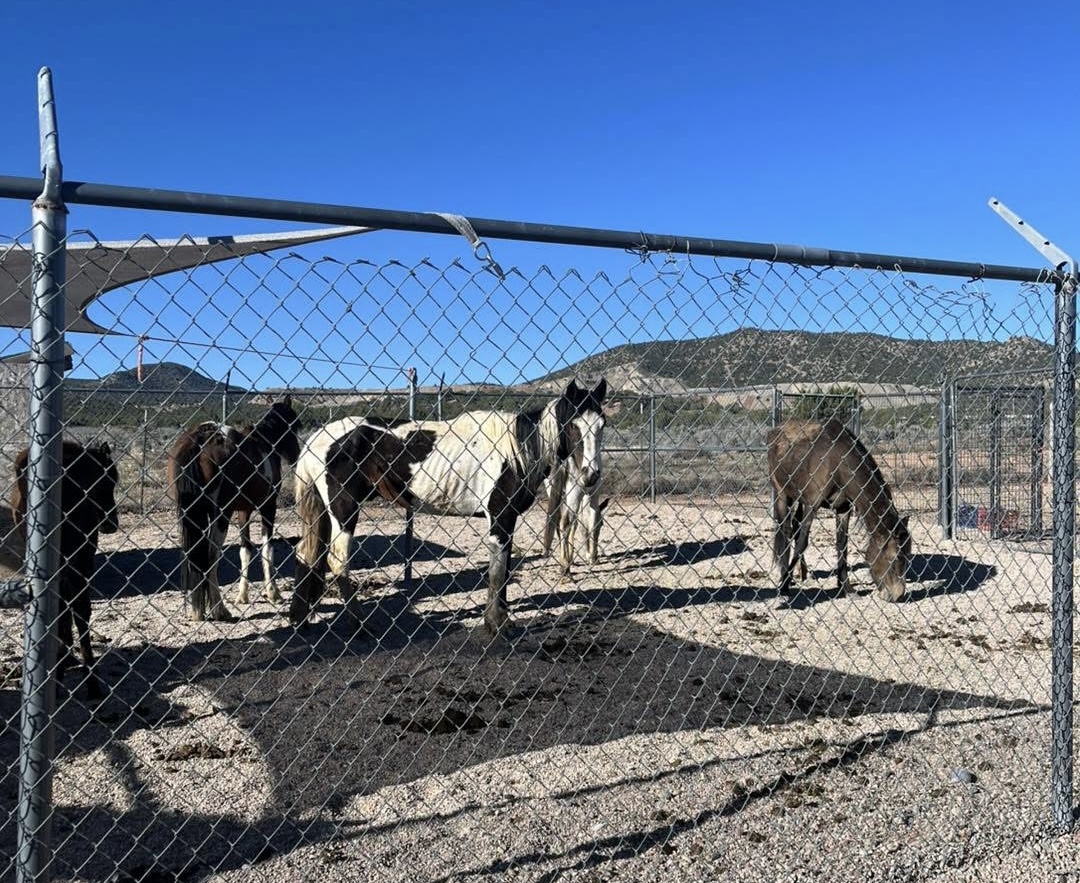
On April 23, the Iron County Sheriff’s Animal Shelter posted on Facebook that it had taken in eight horses described as severely underweight and in need of “immediate and consistent feeding to recover.” The post shared photos of the horses and stated the shelter did not have enough hay to sustain them and asked residents to help by donating feed or purchasing it through local farm and ranch stores that would be picked up by the shelter later.

The language of the post emphasized urgency, warning that time was critical and urging the community to share the information so they could reach more people quickly.
After the post was spread across social media, the shelter posted again thanking the community for their support. The post included eight more photos of the horses and reported that hundreds of bales of hay had been donated along with feeding and watering troughs, supplements, mineral blocks, vet care and “much, much more.”
PRESS RELEASE LANGUAGE RAISES FURTHER QUESTIONS OF PREJUDICIAL IMPROPRIETIES:
The Iron County Sheriff’s Office formalized its position in an official press release outlining the investigation into the horses and the subsequent arrest of the suspect, including details about the condition of the animals.
In that release, the office stated the horses were found suffering from “clear signs of neglect and malnourishment,” and described at least one horse as being in such severe condition it was unable to stand and had to be euthanized.
The release also outlines the sequence of the investigation, the seizure of the horses, and the charges filed, emphasizing the severity of the situation.


While those statements on their own may not rise to the level of extrajudicial or prejudicial, when considered alongside the previously released photos, they present conclusions about the condition of the animals and the nature of the alleged neglect before the case has been heard in court. At the same time, the document states the case remains under active investigation and that no additional information will be released.
That combination—detailing the condition of the animals in definitive terms while the case is still pending—raises questions about how the information being presented to the public could influence a potential jury pool if the case proceeds to trial.
THE ARREST:
A week after the posts and photos circulated online, Nathaniel Brendan LeBaron was booked into the Iron County Jail on one class A misdemeanor for obstruction of justice and eight class B misdemeanor animal cruelty charges—all filed as intentional or knowing.
According to court documents filed in 5th District Court, the investigation into LeBaron began after a report was made to the Bureau of Land Management (BLM) regarding horses in Arizona found in what investigators described as a severely dehydrated and malnourished state.
A BLM officer reportedly told investigators she had never seen horses in that condition, stating several were in the process of dying and others had already died. As a result, LeBaron was directed by the BLM to re-home the animals.
Instead, according to the filing, LeBaron transported multiple horses into Iron County. A reporting party later provided video and photos showing the animals in what was described as “dire condition,” including footage of two dead horses and others with visibly protruding bones.
When deputies responded, they allegedly confirmed the condition of the animals. The filing stated the horses had no access to hay and were instead only provided straw, which reportedly does not provide sufficient nutrition to sustain them. Of the 11 horses located, two were allegedly already dead and one was so weak it could not stand and had to later be euthanized the affidavit stated.
A local veterinarian tending to the horses from Color Country Veterinary attributed the death to extreme dehydration and malnourishment, and noted the horses were estimated to be between one and two years old.

Make a one-time donation
Make a monthly donation
Make a yearly donation
Choose an amount
Or enter a custom amount
Your contribution is appreciated.
Your contribution is appreciated.
Your contribution is appreciated.
The court documents also state investigators made multiple attempts to get Nathaniel Brendan LeBaron to cooperate and provide a physical address so a citation could be issued. He allegedly refused to provide that information and later reportedly admitted to giving false information to law enforcement about his location.
The filing also states that after the initial seizure, investigators received multiple reports from family members that additional horses remained on the property. LeBaron initially told deputies he did not have any additional animals however investigators later learned he had attempted to conceal the horses by enlisting others to capture and relocate them. When asked about additional horses, he allegedly admitted to having two; however, the affidavit states that between five and seven were transported to Panterra, Utah, on April 25.
Despite the “dire conditions” of the animals described in the court documents, the affidavit noted that once the horses were seized and provided proper feed and care, they began showing signs of improvement.
Lebaron was reportedly apprehended in the parking lot of the Iron County Jail where he turned himself into investigators. At the time of his arrest, photos and initial descriptions of the horses had already been circulating throughout the community.
COURT ORDER ADDRESSES MEDIA IMPACT ON JURY POOLS:
In a separate case involving LeBaron’s father, Ross Wesley LeBaron, who was recently convicted of five counts of rape involving incest with his daughter, the court addressed how media coverage affected the ability to seat an impartial jury.

In a March 26, 2024 order, Sixth District Court Judge Marvin D. Bagley denied a request for electronic media coverage of court proceedings in LeBaron’s father’s case, finding that expanded media exposure was “likely to lead to additional and more broad media coverage” with a “significant likelihood of tainting the jury pool.”
The court further noted it was already experiencing difficulty assembling a jury pool without excluding individuals who had been exposed to media coverage.
“The Court is already having issues with creating a jury pool to select from without having to remove jurors who have been tainted by exposure to media coverage. Under these circumstances, electronic media coverage of pretrial proceedings will create adverse effects greater than those caused by media coverage without recording or transmitting images or sound and is reasonably likely to prejudice the right of the parties to a fair proceeding,” the order states.
While that case involved different charges and a different defendant, the court’s findings highlight how widespread media exposure—particularly when it includes images and detailed descriptions—can become a factor in criminal proceedings before a case is heard in court.
In the current case, coverage has already extended beyond Iron County, with images, descriptions, and strong public reaction circulating across local and statewide platforms prior to trial, raising questions about the ability to seat an impartial jury and the appropriateness of prejudicial or extrajudicial statements.
This is not the first time concerns have been raised about prejudicial statements involving the Iron County Sheriff’s Office. Last year, in the criminal case against local contractor David Bruce Kuykendall, questions emerged regarding extrajudicial statements by the Iron County Attorney’s Office and prejudicial statements made by members of the Sheriff’s Office during the investigation. According to records and correspondence reviewed by The Zion Times, those concerns led to the case being transferred to the Washington County Attorney’s Office for review and prosecution.
That case was ultimately dismissed after outside prosecutors reviewed the evidence.
While unrelated to the current charges, the Kuykendall matter represents a recent instance in which questions surrounding public statements and investigative conduct resulted in the removal of a case from local jurisdiction and raised concerns about how those issues can impact whether a case proceeds in court at all.
THE QUESTION MOVING FORWARD:
The facts of the case and the timeline of events surrounding the arrest of LeBaron and the subsequent seizure of the horses are now part of the public record.
However, the way those facts were introduced to the public—through images, descriptions, and statements made prior to formal court proceedings—raises broader questions about how this case will be handled moving forward.

Courts have already acknowledged, including in prior LeBaron family cases, that widespread media exposure can affect jury pools and the ability to ensure a fair trial.
In this case, that exposure was not limited to Iron County. It spread quickly across local and statewide platforms, accompanied by strong public reaction and conclusions about the outcome before the case reached the courtroom.
Whether those factors ultimately impact how the case proceeds will be determined in court.
It is unclear at this time how much the recent exposure of the criminal investigation into LeBaron will impact the ability to seat an impartial jury or if the case will be able to proceed in court at all.
QUESTIONS ABOUT RESOURCES AND RESPONSE:
The circumstances surrounding the public appeal for feed have also raised questions about resource allocation within the county.
While Iron County taxpayers are funding a multi-million dollar jail project, the Sheriff’s Office stated the animal shelter did not have sufficient hay to sustain the horses and asked the public for assistance.
That contrast has prompted questions about whether adequate funding and planning are in place for large animal seizures, particularly in a rural jurisdiction where livestock cases are more likely to occur.
The Zion Times reached out to Iron County Sheriff Ken Carpenter for comment regarding the public release of photos during an active investigation, the shelter’s request for donations, and the apparent lack of resources to care for livestock in the county’s rural shelter, as opposed to city shelters that primarily handle small animals.
In response, Sheriff Carpenter stated, “We rarely care for large animals, so don’t store feed in quantity for long term use. Most shelters, including ours, receives food for the care of animals through donation. For example, most, if not all shelters in Iron County receive dog food as a donation from Best Friends. This saves taxpayers a considerable amount of money each year. If we have to purchase it, we will, but if we can use other resources that support our efforts to care for these animals, we will do so.”
However, the Sheriff’s response did not directly address what efforts, if any, were being taken prior to the LeBaron investigation to ensure the shelter had adequate funding for their animals—particularly in cases involving large animal seizures—beyond reliance on donations from organizations like Best Friends Animal Sanctuary.
It also did not address whether those needs could have been met by the community without releasing images tied to an active criminal investigation.
The Iron County Attorney’s Office was also contacted regarding concerns about extrajudicial and prejudicial statements in the case.
As of publication, the County Attorney’s Office has not yet responded.
PHOTOS USED IN THIS ARTICLE ARE COURTESY OF THE IRON COUNTY ANIMAL SHELTERS FACEBOOK POST
INDIVIDUALS LISTED ON THIS PAGE HAVE BEEN BOOKED INTO IRON COUNTY JAIL AND ARE ACCUSED OF THE FOLLOWING CRIMES BUT ARE PRESUMED INNOCENT UNTIL AND UNLESS PROVEN GUILTY IN A COURT OF LAW.
FLDS ARRESTED FOR SUSPECTED HUMAN TRAFFICKING IN IRON COUNTY – The Zion Times

Leave a Reply